
Artem Kovalev
Drone engineering
Designs the airframe, propeller guards and rotary brush.
CleanLine.app · autonomous micro-drones
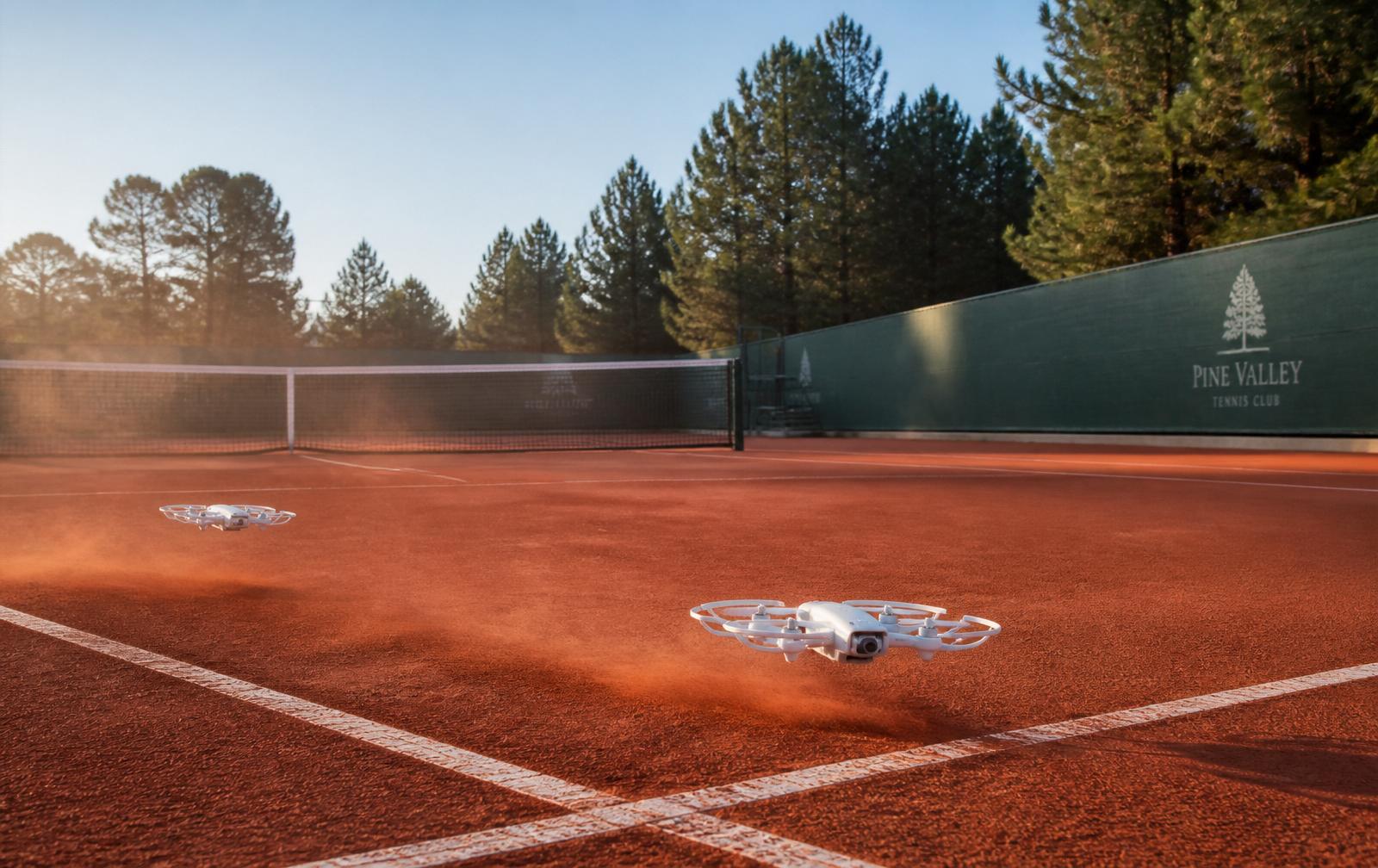
A pair of autonomous micro-drones launches from its dock at the press of a button and sweeps 146 meters of lines while players change over.
About us
CleanLine started on court: we were tired of waiting for lines to be swept by hand between bookings. Over two seasons we built a lightweight drone with a rotary brush, taught it to hold a line within two centimeters, and packed it all into a dock that lives by the net all year.
Today the team combines aerodynamics, precise navigation and hands-on tennis club operations — we own both the hardware and the promise that your staff presses exactly one button.
Drone engineering
Designs the airframe, propeller guards and rotary brush.

RTK navigation & software
Owns line-following trajectories and positioning accuracy.
Club operations
20 years managing clay courts and booking schedules.

Business development
Works with academies, club chains and sponsorship programs.
Technology
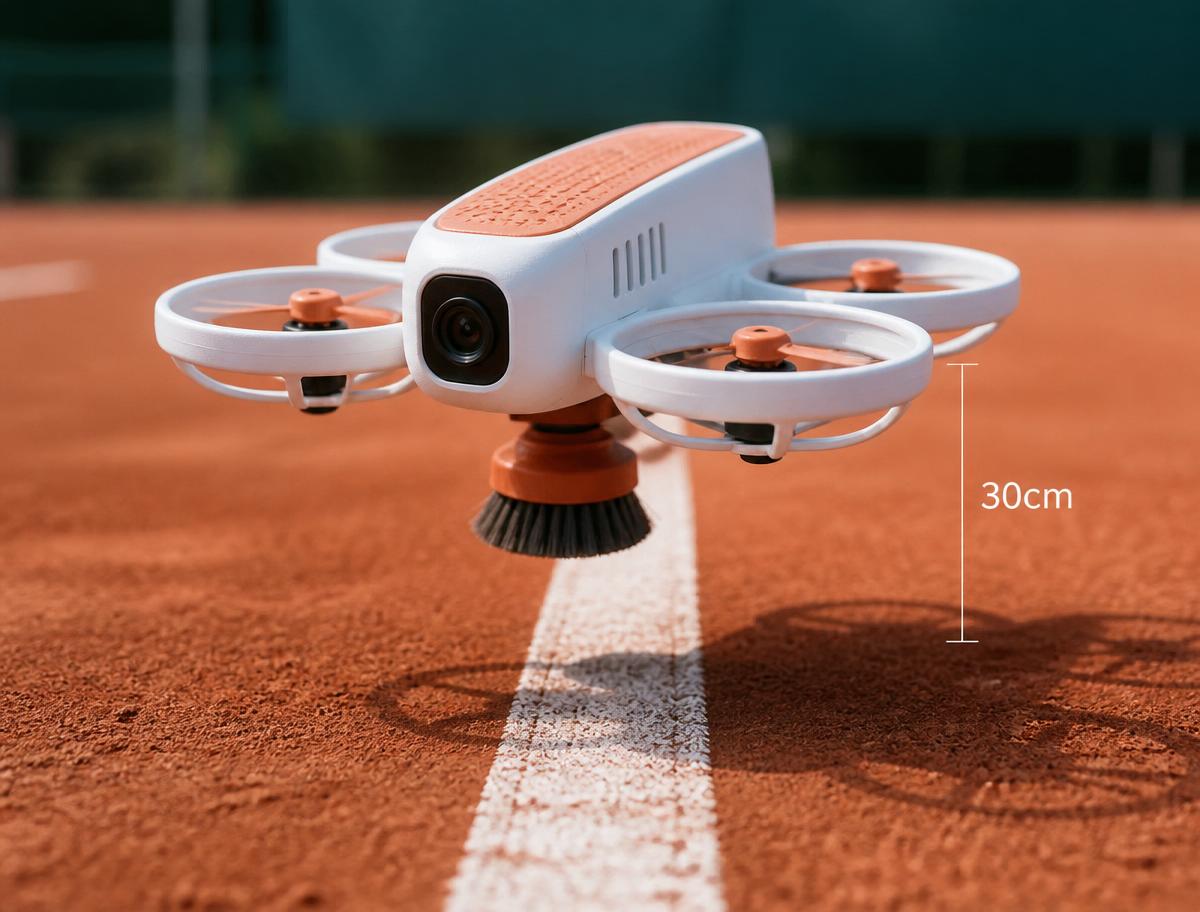
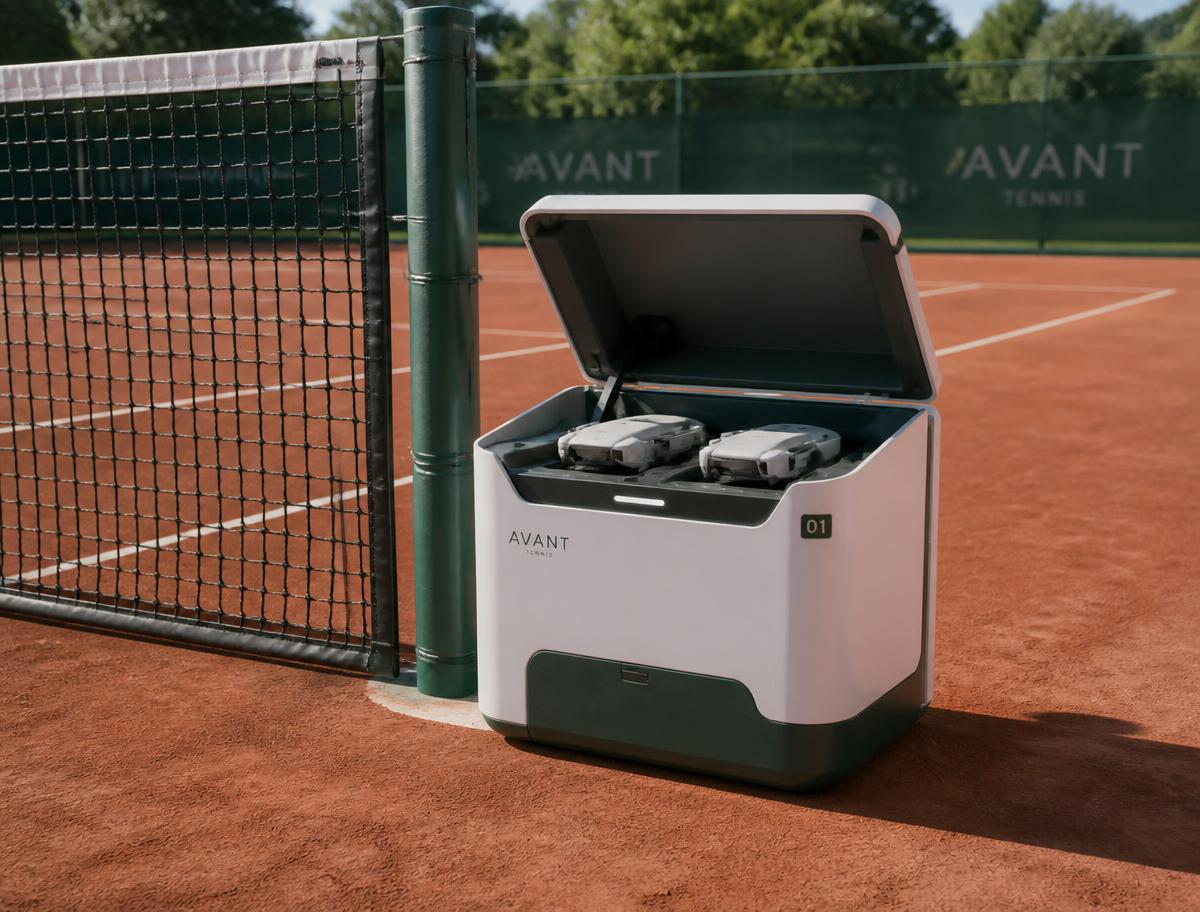
A light airframe raises no extra dust and stays safe around people.
Soft bristles lift clay off the line tape without shifting it.
The drone follows the line exactly, not roughly alongside it.
Fully ducted rotors — safe for the surface, the net and the people.
Charging, rain cover and a one-button launch.
The working altitude pushes dust away from the tape, not onto it.
Court math
Throughput here is calculated, not promised. This is the full line survey of one court.
Line layout
Split and speed
We don't put hardware on every court. Changeovers last 5–10 minutes — one pair of drones sweeps two courts back to back.
Marketing
Two drones lift off together and glide along the lines — phones come out, stories get posted.
The drone shell and dock are ad surfaces for a club or tournament sponsor.
Automated line sweeping is a visible argument for a higher court fee.
Slow-motion launch, red dust cloud, a perfect white line — a story that works with zero budget.
Gallery
Court math, cascade routing and hardware anatomy — four visuals prepared for club newsletters, decks and social posts.
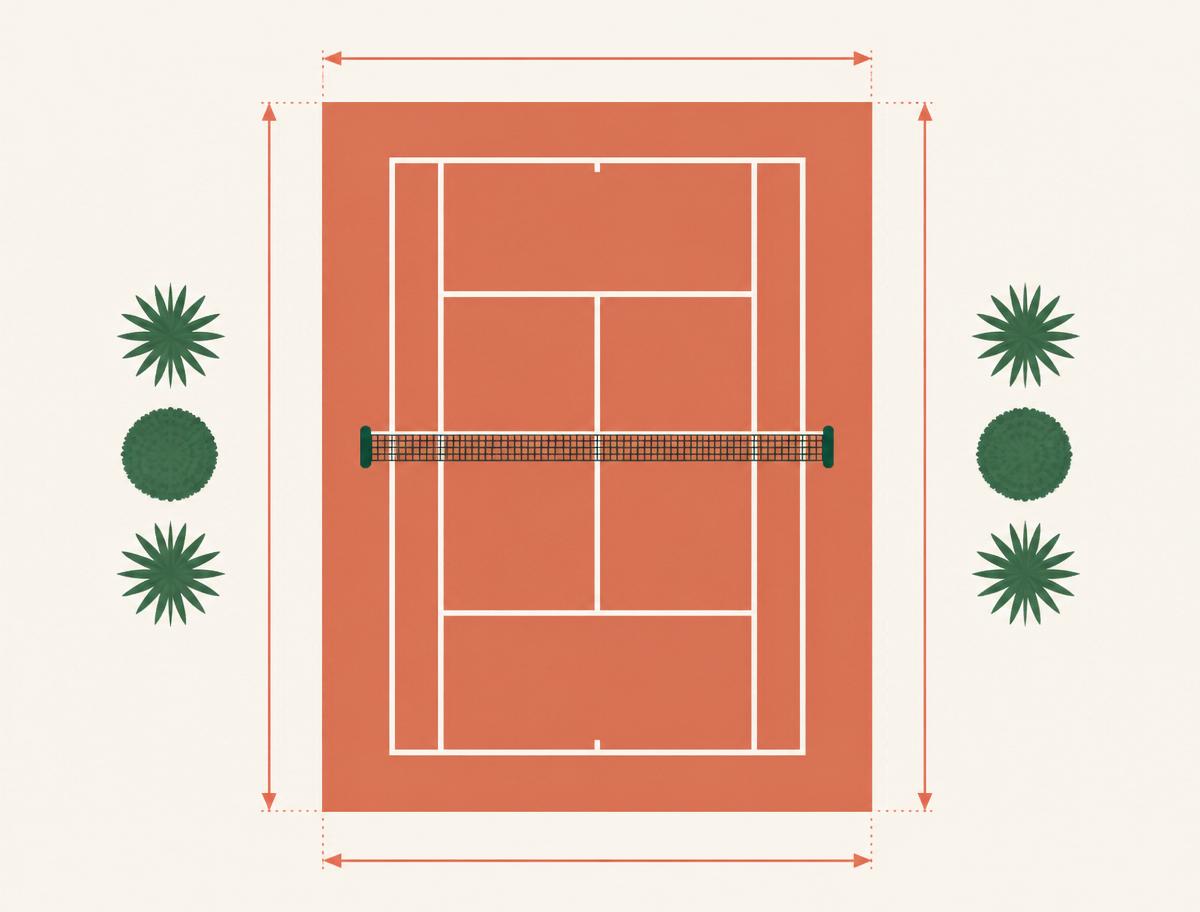
146 m of playing lines: baselines, singles and doubles sidelines, service lines.
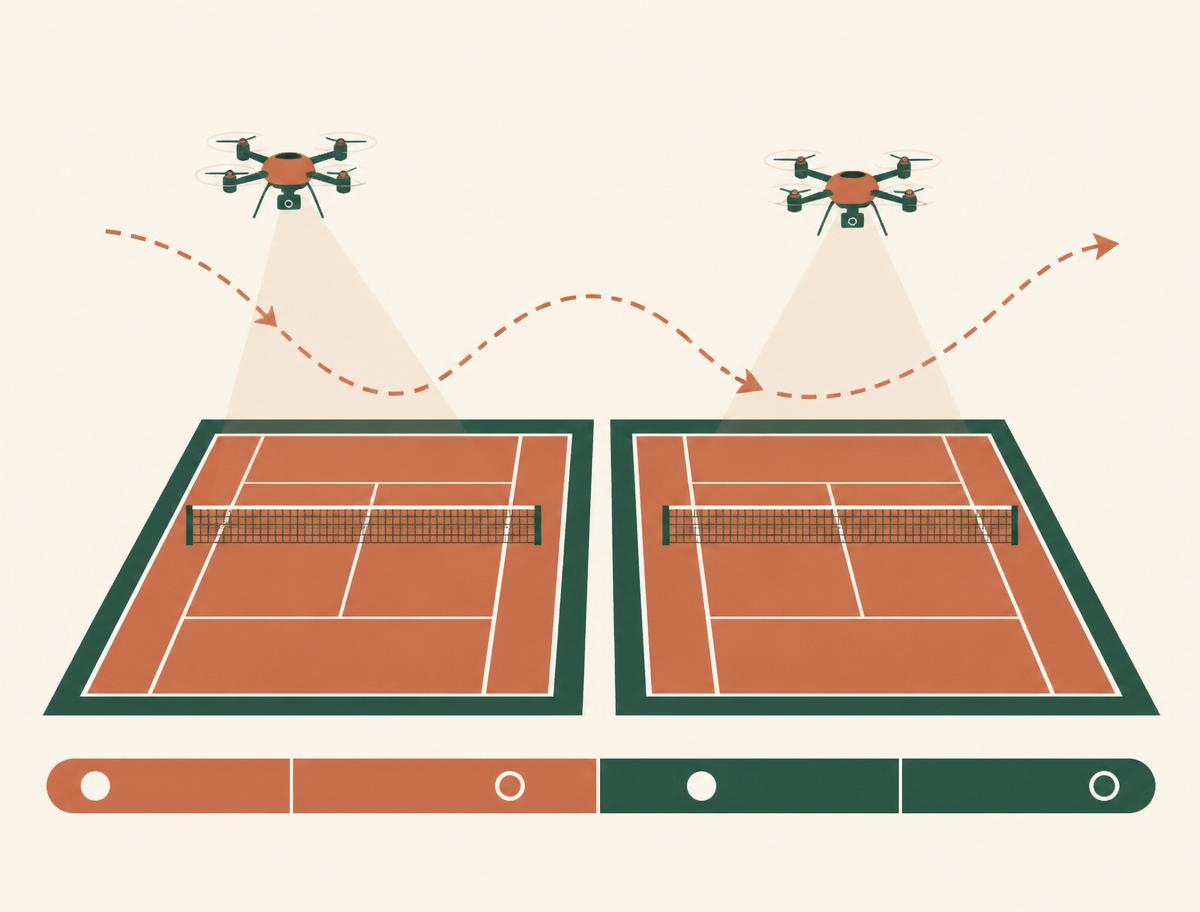
One pair of drones covers two adjacent courts in 4.8 minutes, including the 12-second hop.
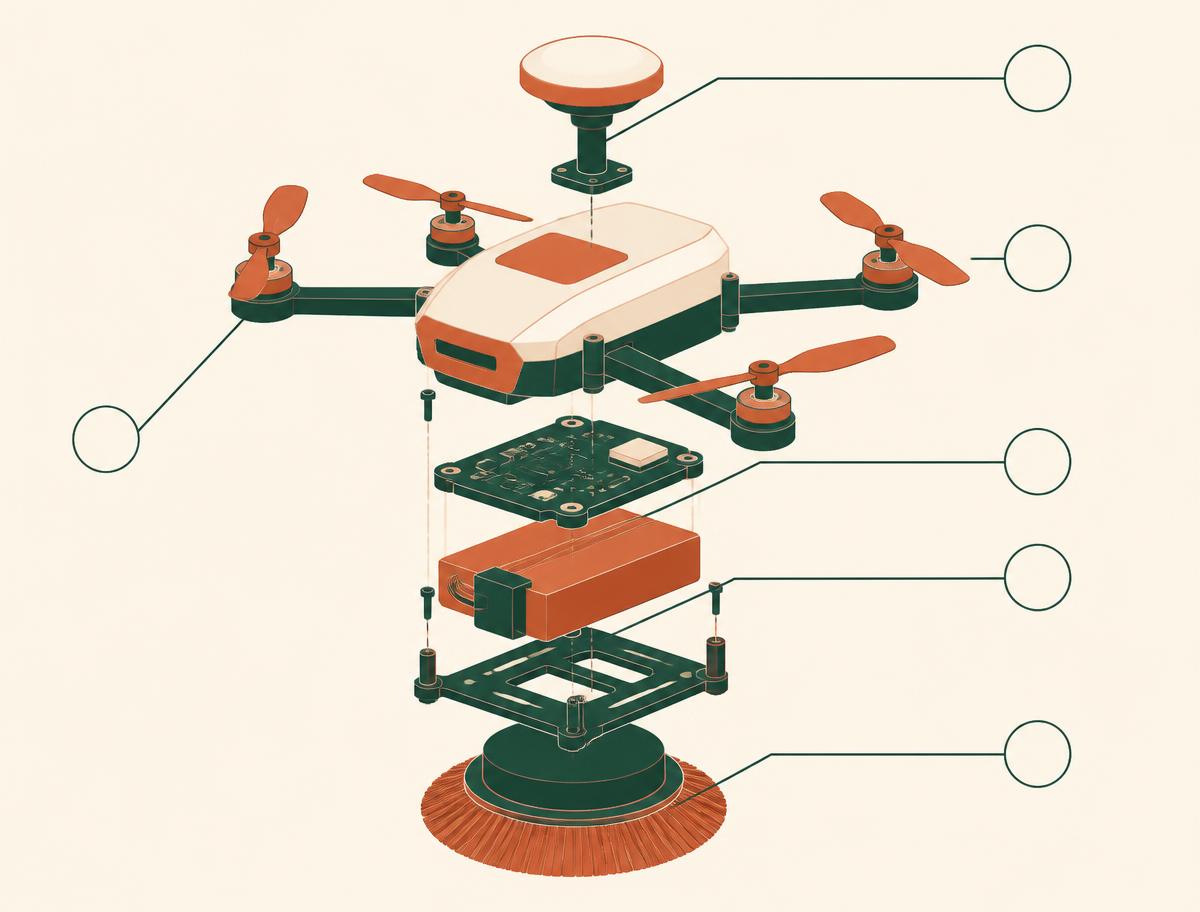
0.5 kg airframe, rotary brush, RTK-GPS antenna and a swappable battery pack.
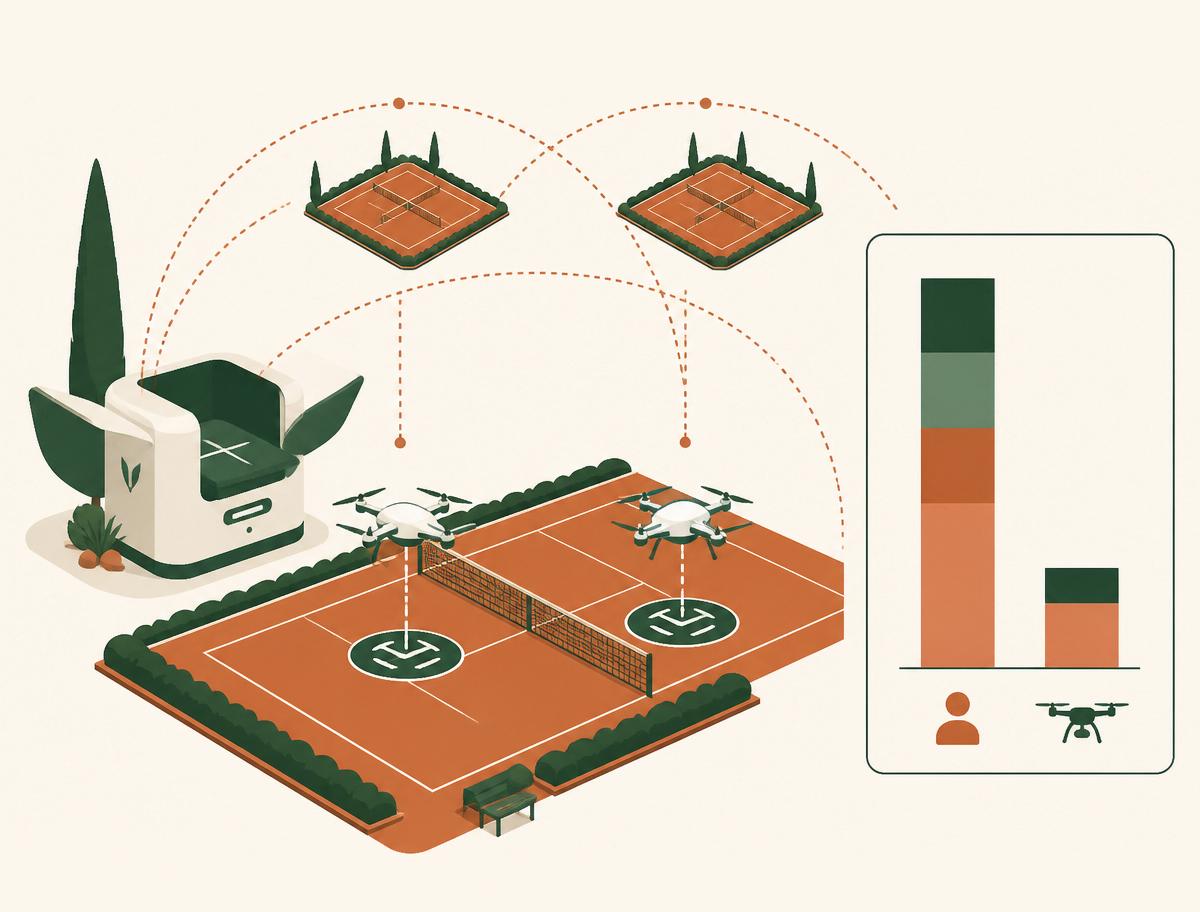
A dock lives courtside year-round; CapEx is roughly 5x below industrial drone docks.
Copy these under a clip of the launch — they work for club Instagram, Reels and TikTok.
Launch clip“Two drones. 146 meters of lines. Under three minutes — while you switch sides.”
Slow motion“Red dust up, white line back. This is what a court changeover looks like in 2026.”
Club positioning“Every booking on our courts starts on freshly swept lines. Automatically.”
Sponsor angle“Your logo flying twice an hour over the busiest court in the club.”
All visuals are available in print resolution on request — write to info@cleanline.app.
Costs
Micro-drone + rotary brush + RTK module + auto dock costs roughly 5× less than industrial DJI Dock–class systems. A pair of drones with a base is about $2,400.
| Club size | Hardware | Time to sweep all courts | CapEx |
|---|---|---|---|
| 5 courts | 3 pairs (6 drones) | 4.8 min | $7,200 |
| 10 courts | 5 pairs (10 drones) | 4.8 min | $12,000 |
| 20 courts | 10 pairs (20 drones) | 4.8 min | $24,000 |
CapEx covers hardware with docking stations. Servicing and spare brushes come with the support package.
Commercial offer
1 pair for 2 courts
5 pairs for 10 courts
20+ courts
Send us your court count and booking schedule — we'll come back with sweeping timings and an exact quote.